
The South Caucasus and Central Asia: the transformation of the post-Soviet space
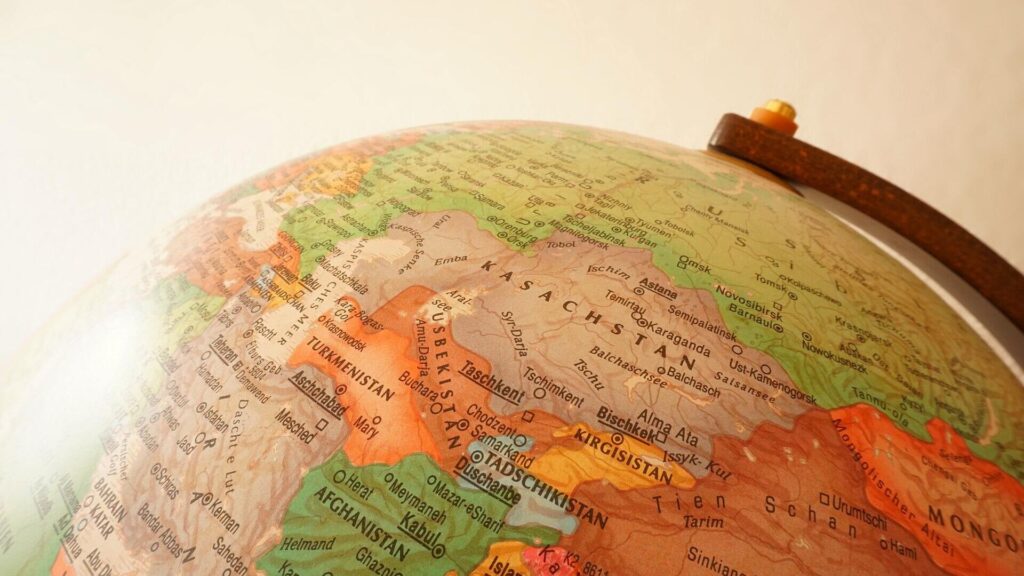
Russia’s military aggression against Ukraine, or, more precisely, the quite obvious failure of the Kremlin’s expansionist plans (strategically, the Russian Federation has already lost, only the aspect of the frames of this defeat and Ukraine’s ability to regain control over its entire territory, including Crimea and Donbas, will remain open) led to a reformatting of the spheres of influence in regions adjacent to Russia, which undoubtedly include the South Caucasus and Central Asia. The effective and self-sacrificing struggle of the Ukrainian people creates favorable conditions for other regional players in order to, if not completely get rid of, then at least level their own dependence on Moscow.
The region of the South Caucasus and Central Asia is entering a period of serious turbulence due to the weakening of Moscow’s position and the creation of new regional alliances based on Turkey, Azerbaijan and Kazakhstan in unison with the strengthening of influence and economic expansion of the Middle East. The situation in these regions is changing quite dynamically, as demonstrated by the September SCO summit, where the leaders of the People’s Republic of China and Turkey (Xi Jinping and Recep Erdogan, respectively) clearly demonstrated to Vladimir Putin that the period of Russian dominance in these regions is over.
For clarity and large-scale understanding of these processes, it is advisable to focus on individual directions of these transformations, including an analysis of the strategic plans of key regional players.
Turkey vs Azerbaijan
It is appropriate to analyze the positions of these two players together in the context of forming the strategic level of relations between states in all possible planes: economic, security, political. Baku and Ankara will work together to solve security challenges in the South Caucasus region – Armenia, Russia, Iran.
Both sides will also play key roles in launching the Trans-Caspian trade route project and creating an alternative to Russian energy transit to Europe. The union of Azerbaijan and Turkey is a guarantee of stability in the South Caucasus, which will meet the interests of the US, while increasing the supply of energy resources from Azerbaijan and, possibly, Turkmenistan to Europe is a strategic task for the EU.
If from the point of view of the military component, Turkey remains an extremely powerful player, the economic situation in the middle of the country leaves much to be desired. The independent inflation research group ENAG stated that the real level of inflation in Turkey reached 186% per year, as opposed to the official indicators of the Ministry of Justice (83%).
The baggage of economic problems significantly weakens Ankara’s geopolitical ambitions, despite the very favorable geopolitical conjuncture in the South Caucasus, where Moscow is gradually losing its own positions. The economic crisis in Turkey may lead to internal political transformations in the middle, especially on the eve of the presidential elections, and slow down Ankara’s ambitions in the South Caucasus and Central Asia, but it will definitely not remove them, because it is about strategic interests.
Azerbaijan will try to make the most of its advantages as a reliable supplier of energy resources to Europe. Head of state Ilham Aliyev said that the explored gas reserves in the country amount to more than 2.5 trillion cubic meters. At the same time, Aliyev added that last year’s export of Azerbaijani gas amounted to 19 billion cubic meters, of which almost half (8.2 billion) went to the European market, which is 40% more than in 2020.
Ilham Aliyev added that Azerbaijan plans to increase the volume of gas supplies to Europe by 2027 by approximately 8-10 billion cubic meters – twice. This is another confirmation that Azerbaijan and Turkey plan to create a joint trade corridor to European markets, which will include significant volumes of Chinese goods along with energy resources available in the region – this is a very ambitious project that can significantly strengthen the positions of both states on the international arena.
Turkey, together with China, is building a new geo-economic architecture within the framework of the Trans-Caspian trade route, minimizing the role of Russia. Under this project, they plan to attract tens of billions of dollars in the form of only infrastructure investments, and the only serious guarantee on this path is the creation of a safe land corridor through the sovereign territory of Armenia – we are talking about the so-called Zangezur corridor (Syunik region of Armenia), which should connect mainland Azerbaijan with their Nakhchivan Autonomous Region and Turkey.
One way or another, Azerbaijan and Baku seek to solve this problem in the near future – in a peaceful or military way. Azerbaijani Prime Minister Ilham Aliyev together with Recep Erdogan will continue to lobby for the idea of extraterritorial status of the route, but Armenian President Nikol Pashinyan is unlikely to agree to such conditions. At the same time, Pashinyan’s bet on the Kremlin has taken a backseat, in the near future he will try to get security guarantees from Iran on the one hand, and agree on protection from the US and the EU (France) on the other.
Negotiations with Iran are also being intensified by Azerbaijan and Turkey, for which the scenario of disruption of the trade route with China remains very unprofitable. Tehran will try to get the maximum from all interested parties, but the decisive factor may be precisely the position of Beijing, which maintains a huge level of economic influence on Iran, but at this stage has not yet seriously entered the game.
Armenia
Yerevan’s positions traditionally remain the weakest in the region due to limited own resources and the toxic military-political alliance with Moscow, which proved effective in the 90s (the first Karabakh war, which lasted until 1994), but only because of Turkey’s weak presence in the region. At that moment, Yerevan gained control over Nagorno-Karabakh (the legal territory of Azerbaijan), which, apart from political dividends, did not bring the Armenian side anything, only a huge cascade of deferred problems, which hit them with devastating force two decades later.
If we talk about Armenian-Russian relations, then in the period from 2016 to 2021, the level of bilateral trade between these states increased from 1.6 to 2.5 billion dollars. Oddly enough, in the short term, Armenia’s economy will get a big boost due to “mobilization” and “offshore” migration from Russia. Thus, in the first half of 2022, the growth of the Armenian economy amounted to 11% instead of the planned 4%. The service sector grew by almost 15%, the financial market increased by 25%, and the construction sector – by 21%. But the escalation of military operations, the threat of which remains at a high level, can completely reset all growth indicators.
As of now, Armenia has built a post-colonial type of economy with a huge attachment to Russia. Yerevan’s traditional bet on Moscow turned out to be extremely weak due to the formation of the strategic format of relations between Ankara and Baku. It is once again more profitable for Moscow to agree with a more powerful regional alliance at the expense of Armenia’s interests than to go to a confrontation with an unpredictable finale. This format of Russian-Armenian relations is already permanent.
Moscow acts as a constant donor of war in the region in order to maintain its own influence as a “mediator” or “peacemaker”, instead building a rather close format of cooperation with all participants in the conflict. The full-scale escalation of Russian military aggression against Ukraine made Yerevan’s position even more difficult. If earlier the Kremlin could, if it wished, act as a real guarantor of Armenia’s security, then due to the failed military campaign against Ukraine, such a military opportunity was eliminated, and now Moscow is forced to seek a compromise with Turkey, so that the loss of Moscow’s positions in the South Caucasus, Central Asia, and the Middle East took place smoothly, with “saving one’s own face”.
Kazakhstan
The main problem of Kazakhstan is a long period of internal political instability, which was caused by the transition period after the transition of power in 2019, when Kasym-Zhomart Tokayev came to power instead of the Nursultan Nazarbayev, at least formally. In recent years, there has been a difficult internal struggle between the Nazarbayev clan and the new President Tokayev, the quintessence of which became the “winter” protests at the beginning of this year, for the settlement of which Tokayev had to turn to the CSTO (Russia) for military assistance. The situation was resolved and Tokayev managed to strengthen his own position and become the sole head of the country not only de jure, but also in reality.
Kasym-Jomart Tokayev started a series of large-scale political and economic reforms (the political ones still look rather dubious) for the further development of the country. However, the expected gratitude and strengthening of Astana’s dependence on Moscow did not occur, despite very ambiguous dynamics. There are several reasons for this – it is the full-scale aggression of the Russian Federation against Ukraine and the multi-vector foreign policy of Kazakhstan in recent decades, where, along with allied relations with Moscow, there has been a maximum strengthening of bilateral relations with the two largest power centers – the USA and China. If we add here another strategic vector of Kazakhstan’s foreign policy – the union of the Turkic states together with Azerbaijan and Turkey, then it becomes clear that Moscow in this particular situation is far from the main beneficiary of the stability of this state.
In addition, the combined volume of Chinese and American investments in the country’s economy over the past 10 years has exceeded the $100 billion mark, which makes Kazakhstan “untouchable” in terms of stability and territorial integrity for Moscow. This opens up fantastic prerequisites for the further development of the state in new geopolitical conditions.
The September visit of the President of the People’s Republic of China, Xi Jinping, and the results of his negotiations with Kasim-Jomart Tokaev testify to a new, strategic vector for the development of Sino-Kazakh bilateral relations, which will include not only economic dividends, but also direct security guarantees. At the same time, official Astana will expand the potential of cooperation with allies Azerbaijan and Turkey, which will probably lead to the signing of similar documents on strategic cooperation and cooperation in the military, political and economic spheres.
In the future, Kazakhstan will maintain a high level of bilateral trade with Russia (last year the total volume was more than 25 billion dollars), but only within the framework that is beneficial to itself – the withdrawal of Russian assets abroad due to the threat of sanctions, cooperation in the field of nuclear energy and the export of energy resources, etc. But the story of Kazakhstan’s exit from the CSTO in the near future is an established fact, although the legal status quo will be fixed in the perspective of the next few years.
This will lead to a decrease in dependence on Moscow and further reorientation of the state’s foreign policy doctrine. Probably, Kazakhstan will make significant efforts to stabilize the internal economic situation in the perspective of the next five years, after which it will try to strengthen its own position in the region, extrapolating its own activity to a number of neighboring states – Uzbekistan, Kazakhstan, Turkmenistan, Uzbekistan, etc.
Main trends
- The actual destruction of the security structure of the Russian Federation in the form of the CSTO in the perspective of the next 2-3 years. Kazakhstan will maintain the status of a neutral state, securing security guarantees from Turkey and the People’s Republic of China, after which it will begin the process of withdrawing from the CSTO – this process will last about two years. Armenia, if there are no significant upheavals, will begin the exit procedure in 2023. The loss of these two states will call into question Russia’s real capacity as a “guarantor” of military and political stability in the South Caucasus and Central Asia and will lead to the minimization of Moscow’s influence in these regions.
- Strengthening the positions of regional power centers – Turkey, Azerbaijan, Kazakhstan. Turkey will try to play a key role in the framework of the union of Turkic states and will try to create prerequisites for the maximum integration of the tripartite partnership in the economic, political and security spheres. If Ankara’s position has weakened from an economic point of view, it has strengthened a lot from a security point of view, and at the moment this seems to be an extremely important aspect for Baku and Astana. Therefore, Ankara will increase the format of strategic relations with Azerbaijan and Kazakhstan and will try to become a key regional partner for Beijing, a kind of substitute for Moscow.
- The position of Armenia looks the weakest. Despite the serious support from the USA and France, it is not necessary to count on the fact that these countries will go to a confrontation with China and Turkey in order to defend the interests of Yerevan. It will be easier for big players to come to an agreement among themselves by finding a certain compromise option. As harsh as it may sound, Yerevan does not have the internal resources to counter the consolidated military threat of Turkey and Azerbaijan on its own.
- At the same time, the level of this threat is extremely high, because Baku and Ankara need to close the issue of the trade route one way or another, and they are determined to do it in the near future. Russia will not be able to seriously help Armenia, and it is far from a fact that it will have a definite desire. Therefore, Armenia will be forced to compromise with Turkey and Azerbaijan and will try to integrate itself into the new geopolitical realities – this is the only correct way in the current situation. Beijing and Washington are interested in stabilizing the situation, which increases the probability of a positive exit from the crisis. Iran in this particular case is unlikely to escalate in the region due to the huge cascade of internal political problems and the prospect of at least partial lifting of sanctions.
- The strengthening of China’s role will occur through the intensification of trade and economic expansion in the region under the influence of the One Belt, One Road project or its modification in the form of the Trans-Caspian trade route. This will allow attracting tens of billions of dollars in the development of infrastructure projects of various levels and will bring serious dividends to the participants in the form of direct financial income from transit and the development of many sectors of the economies of the countries participating in the project.